December 2008: Poll Averages and Comparisons

Overall Monthly Report:
Record highs for Smer and disagreements elsewhere

For the first time I can remember we have both FOCUS and UVVM numbers by mid-month (FOCUS getting there first this month) and so we can do a quick analysis already.  If time allows over the holiday season, I may try to do a few more year-on-year comparisons.

This graph averaging the last 24 months of polling results from multiple sources shows a number for Smer that is higher than any previous average.  Although the party is not at is record high for either UVVM or FOCUS, this is the first time it has been at a near-record high for both in the same month.  SDKU is at a correspondingly record low, though since these parties do not share the same voter pool and any correspondence is likely a coincidence.  (Unlike Smer, furthermore, SDKU is not seeing numbers that are unprecedented for the party: what is here a record low would have been for the party a near record high between 2003 and 2006, though then the party was in the tougher position of bearing responsibility for government actions)

2:||||||||||||||||||||||||

These numbers do not give the party a majority of seats but they do bring it within 3 of a majority, again the highest numbers recorded for a poll average.  The opposition, by this calculation, would have a mere 46, less than 2/3 of Smer alone.

Multiple-poll+average+ for +estimated+party+seat+distribution for the most recent +1+month+ in Slovakia

It is worthwhile to note the degree to which these numbers reflect disagreement among pollsters, however.  In the first place, the “Smer-gap” has re-emerged.  Smer numbers for FOCUS have recently notched upward, but now so have its numbers for UVVM, so we are back at a 6 point difference which is smaller than before only in the sense that it must be measured against a higher baseline for Smer so that it accounts for a smaller overall percentage.
Multiple-poll+average+ for +Smer+ for the most recent +4+months+ in Slovakia

For SDKU, however, the gap has now disappeared and both polls show the party at the exact same level, just above 11%, though not quite in need of the shift in axis that SNS suffered in last month’s poll (from the 10%-20% range to 5-15%).  Still, the news for SDKU is not good.

Multiple-poll+average+ for +SDKU+ for the most recent +4+months+ in Slovakia

This graph of recent results for SNS shows the return of divergence after long months of near-agreement. FOCUS shows a continuing slide while UVVM shows a sharp rise.  Is politicization of conflicts with Hungary working for SNS?  It depends on your pollster.

Multiple-poll+average+ for +SNS+ for the most recent +4+months+ in Slovakia

For MK it does not depend on the pollster–we are back to agreement after a month of disagreement–but MK numbers have been so erratic (given its base) that it is hard to know what to think.

Multiple-poll+average+ for +MK+ for the most recent +4+months+ in Slovakia

As with SNS, it was either a good month or a bad month for HZDS depending on your pollster.  The party’s numbers from FOCUS this month exceed its numbers from UVVM, something that has happened only 4 times in the 30 months since the previous election.  Regardless of relative position, the two are quite close suggesting that the party’s polling level lies around 8% at present, not good for a party that regularly commanded twice that level four years ago, but not in danger of extinction.  Long term trends show the party falling below 5% but not in the next year.

Multiple-poll+average+ for +HZDS+ for the most recent +4+months+ in Slovakia

This graph of recent results for KDH shows the emergence of a gap that had, for a while, disappeared.  Through most of 2007 the party polled better with FOCUS than with UVVM and it does so again, with a nearly 4 percentage point gap, one of the highest in percentage terms for any party.  Both, however, show a slight rise for the party from November to December.

Multiple-poll+average+ for +KDH+ for the most recent +4+months+ in Slovakia

This graph of recent results for KSS shows little change: the party usually polls better with FOCUS than with UVVM and it does so again.

Multiple-poll+average+ for +KSS+ for the most recent +4+months+ in Slovakia

If all we had were FOCUS numbers, it would be easy to accuse this post of burying the lead: “SF nears threshold of electability.”  That may be true, especially as dissatisfaction with SDKU appears to grow, but here we find it’s only true of one poll:  The party scores 4.5% with FOCUS but remains mired at 1% with UVVM.  There is a story here but it is hard to know which way it is going.

Multiple-poll+average+ for +SF+ for the most recent +4+months+ in Slovakia

Other parties remain low.  The November bump for HZD has receded in December and ANO is at at near-record lows with both FOCUS and UVVM for the party’s lowest-ever result in poll averages (0.2%).  Its decline in the FOCUS poll may help to explain some of the rise for SF which is its alternative on the non-parliamentary “right.”  The category of “Other” party is also extremely low, suggesting that respondents do not spontaneously offer the Green Party, the Conservative Democrats or Liga-OLS.  Of course this depends on the nature of the questioning: MVK appears to include the Green Party on its list and regularly receives percentages of about 2% for that party.  The same might be true of KDS or Liga if their names were included.

As always, the actual polling numbers are available online at Google Docs:


http://spreadsheets.google.com/pub?key=pdhlCClsiyAMi39bLFpY_Zg

And the most recent three months are below in tabular format (using “iframe” which may not work on all browsers).

<br />

December 2008 UVVM: The High Plateau

UVVM Monthly Report

This overall long-term graph of poll results for UVVM shows Smer back up to a near majority in preferences and with a majority of parliamentary seats while the opposition fades back toward the 30% mark it reached in July and previously in January of 2007.  With the exception of Smer’s rise, however, these numbers are not reflected in this month’s FOCUS poll (which for the first time in my memory beat UVVM to the punch) and which I will discuss in the next post.  This month the FOCUS and UVVM data are at odds in many areas, with one of the highest levels of disagreement between the two (excluding Smer) in the past 18 months, but more on that later.

UVVM+poll+data+ for +all+parties+ for the most recent +24+months+ in Slovakia

This short-term graph of poll results for UVVM minus Smer shows a reversal in the positions of SDKU and SNS, suggesting that the polarization on Hungary-related issues may be working (FOCUS does not show quite the same trend, but again more on that later).  HZDS continues a minor slide with its second lowest score ever in a UVVM poll (though in FOCUS the party holds its own this month).

UVVM+poll+data+ for +all+parties+except+Smer+ for the most recent +4+months+ in Slovakia

Adding these up, the strong month for Smer and SNS minus a slight decline in HZDS gives the coalition a near-record high, just shy of 7 out 0f every 10 voters in Slovakia expressing a preference.  The mirror image non-coalition parties drop to 3 in 10.

UVVM+poll+data+ for +coalition+support for the most recent +24+months+ in Slovakia

The same basic trends apply to blocs.  The rise for SNS counters the drop for HZDS for stability in the “Slovak National” bloc while the drop in SDKU hurts the “Right.”UVVM+poll+data+ for +party+'blocs'+ for the most recent +24+months+ in Slovakia

And a few percentage points here or there makes a huge difference in the nature Slovakia’s potential future government: were these election results, Smer would need no other partners, a development that could significantly reshape the nature of Slovakia’s politics.UVVM+poll+data+ for +estimated+party+seat+distribution for the most recent +1+month+ in Slovakia

UVVM+poll+data+ for +estimated+party+seat+distribution for the most recent +24+months+ in Slovakia

As always, the actual polling numbers are available online at Google Docs:


http://spreadsheets.google.com/pub?key=pdhlCClsiyAMi39bLFpY_Zg

And the most recent three months are below in tabular format (using “iframe” which may not work on all browsers).

<br />

Poll Comparisons: August-November 2008

August-November 2008 Poll Comparisions

Trends and comparisons monthly report

Although the overall figures for the last four months show little change, there have been some curious shifts in the polling numbers of various polling firms.  A graph of recent polling results for Smer from multiple sources shows in particular a sharp increase among Smer supporters on FOCUS polls, especially in October, when FOCUS and UVVM produced the same result.  (For context, the last time that Smer numbers were higher in FOCUS polls than in UVVM polls was April 2006, and since the June 2006 elections Smer’s numbers from UVVM have exceed its numbers from FOCUS by an average of 6 percentage points.  Smer’s preferences were not higher in MVK polls, however, and the party’s record highs in FOCUS polls were counteracted by record lows in MVK, especially in November.  (A side note: because UVVM and FOCUS produced identical results for Smer in October, the overlapping of their + and x symbols misleadingly produces a near-circle that resembles the indicator used here for MVK).

Multiple-poll+average+ for +Smer+ for the most recent +4+months+ in Slovakia

This graph of recent polling results for SDKU shows a reorientation of polling numbers but a stable aggregate.  Numbers for UVVM dropped sharply between October and November but rose sharply for MVK.  They stayed the same for FOCUS and the overall result is an average identical to the previous month.

Multiple-poll+average+ for +SDKU+ for the most recent +4+months+ in Slovakia

This graph of recent results for SNS for the entire season shows tight clustering around the mean, with no more than 1 percentage point difference between any party and the mean.  That mean appears to have settled between 10-11% in the last three months and it is intriguing that this has happened despite an escallation in tensions between Slovakia and Hungary and heightened rhetoric and visibility for Slota.  December’s UVVM numbers may help figure out if there is any delayed effect but if not, it bodes ill for SNS which should be seeing some boost from the conflict.  A side note, I found it necessary this month to shift the range of the graph for SNS from a 10%-20% scale (like SDKU) to a 5%-15% scale (like SMK, HZDS and KDH).

Multiple-poll+average+ for +SNS+ for the most recent +4+months+ in Slovakia

This graph of recent results for MK again show unexpected volatility for what should be a stable population.  FOCUS numbers (hidden under the MVK circle) rebounded from near record lows in the October poll to something closer to the recent FOCUS averages for MK.  The inclusion in November of numbers from MVK (which tends to produce higher numbers for MK than other firms) brought the party’s average back up above 9% but I now have little doubt that MK’s numbers have begun to trail the party’s demographic base in a way they have not done in the past.  Whether this means they will poll lower in elections is an open question.  It will also be interesting to see if December numbers show the conflict between Slovakia and Hungary producing higher MK numbers.

Multiple-poll+average+ for +MK+ for the most recent +4+months+ in Slovakia

This graph of recent results for HZDS shows more stability than for other parties.  The relative positions of pollsters remains unchanged and the party’s average has not changed by 0.5% percentage points from month to month.

Multiple-poll+average+ for +HZDS+ for the most recent +4+months+ in Slovakia

This graph of recent results for KDH shows a bit more volatility than has been the recent norm, with a sharp drop by UVVM countered by a sharp rise by FOCUS.  MVK hugs the mean for this party, as it has often done.  The KDH-splinter party KDS registered for the first time above random noise on MVK’s September survey (though at a mere 0.8%), but the (as usual) haphazard reporting of results by major Slovak dailies does give any information about that party’s performance in November.

Multiple-poll+average+ for +KDH+ for the most recent +4+months+ in Slovakia

This graph of recent results for KSS shows stability.  Good MVK numbers bring the party up near 3% for the first time in half a year but little else seems to have changed.

Multiple-poll+average+ for +KSS+ for the most recent +4+months+ in Slovakia

This graph of recent results for SF shows bigger changes.  After October’s consensus at the 2% mark, FOCUS now shows the party at 3% while the UVVM numbers are back at 1%.  This is always difficult to gauge since the party’s total support is below the margin of error, even assuming no sampling problems.

Multiple-poll+average+ for +SF+ for the most recent +4+months+ in Slovakia

Finally, while I did not prepare the graphs, HZD is at a post election high of 1.9, perhaps because of former party chair Gasparovic’s presidential election bid (the party saw a significant but fleeting gain during Gasparovic’s last effort) while ANO hovers on the threshold of non-existence with another 0.5%.

November 2008: Monthly Poll Averages

November 2008 Poll Averages

Overall Monthly Report: Continuity continued

How many ways to write the same story.  While there are some interesting variations among polls (to be covered in the next post) the overall story of Slovakia’s party support remains astoundingly consistent.  This month takes the edge off of some extremes in last month, most notably last month’s peak performance by Smer (the result of a major rise in its FOCUS numbers which this month have receded somewhat, though they remain higher than before) and valley numbers for SMK (also thanks to unusual FOCUS numbers).  This simply puts every party back at their overall recent averages:

2:||||||||||||||||||||||||

This long-term graph of poll results for coalition and non-coalition parties shows a slight drop in the coalitions performance because (unlike in October) there was no Smer increase to balance weakness in SNS and HZDS:

Multiple-poll+average+ for +coalition+support for the most recent +24+months+ in Slovakia
The long-term graph of poll results for (loosely defined) party “blocs” parties shows very little change over time.

Multiple-poll+average+ for +party+blocs+ for the most recent +24+months+ in Slovakia

And as always (of late), the month’s distribution of parliamentary seats shows a near majority by Smer.  If the election were held today, it would have its choice of a single partner.Multiple-poll+average+ for +estimated+party+seat+distribution for the most recent +1+month+ in Slovakia

Multiple-poll+average+ for +estimated+party+seat+distribution for the most recent +24+months+ in Slovakia

As always, the actual polling numbers are available online at Google Docs:
http://spreadsheets.google.com/pub?key=pdhlCClsiyAMi39bLFpY_Zg

And the most recent three months are below in tabular format (using “iframe” which may not work on all browsers).

<br />

New Parties, Again: Liga-Civic Liberal Party

LIGA-OLSDissatisfaction with Slovakia’s current roster of pro-market, cultural liberal parties has produced yet another entrant: Liga-Civic Liberal Party: http://www.liga-ols.sk.  Liga-OLS enters an crowded field, one already occupied by SDKU as well as the smaller, non-parliamentary Alliance of the New Citizen (ANO) and Slobodne Forum (SF).    

Liga’s proto-platform places it squarely in the same political space as those parties but as with KDS in the pro-market, cultural consevative quadrant, it is not entirely clear how Liga will manage to differentiate itself and draw voters from existing parties.  Pravda (anticipating this party’s creation) dealt with this question earlier this year in a brief article (here in Slovak, here in mediocre Google English translation.  Unlike KDS, Liga at least began its public life with a logo and a website, but it will take a considerable effort and probably some good luck for the party to become prominent enough to siphon off more dissatisfied SDKU voters, especially while ANO and SF are trying to do the same thing.  The Slovak socio-economic left was just as crowded by small parties around 2002 and has since seen a dramatic consolidation, but it had the advantage of “a Fico” and of somewhat less concern with cultural issues (which seem to have an asymmetrical impact, dividing the socioeconomic right more than the socioeconomic left).

More on this as we find out more.   October and November polling updates coming soon.

Conservative Democrats of Slovakia

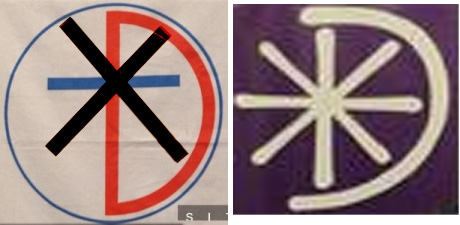
I saw the logo of the Conservative Democrats of Slovakia (KDS) for the first time today (apparently I live a sheltered life; or maybe it’s the party).

KDS
My first thought was that it was a surprisingly attractive and iconic design for a party that seemed to take so long to get its act together.  My second, and rather less charitable thought was that it is less than ideal for a party with less than 1% support in the polls to choose the asterisk as its symbol.  Or perhaps this, too, is just a clever way to sneak into the public opinion polls:

Smer, 44%
SDKU, 13%

Other*

My third thought related to the design.  Am I mistaken in thinking that this is merely the existing KDH (Christian Democratic Movement) logo
KDH logo
With an X through it?
You decide:
KDH and KDS Logos

Poll Analysis: UVVM Volatility

Also available in Slovak, here

I have occasionally expressed concern about the recent numbers coming out of UVVM, particularly those for the Party of the Hungarian Coalition.  Something is wrong there. In the spirit of my heroes at http://www.fivethirtyeight.com, I decided to take a look at the data.  The chart below calculates the total month-to-month differences in party results (up, or down) and then measures these as a percentage of a party’s average support during that period (i.e. a party with an average support of 20 percentage points and average monthly volatility of 1 percentage points would be listed at 5%).  I have done the calculations for the overall average (all of the polls within a given month) and for UVVM and for the two electoral periods for which we have good data: 2002-2006 and 2006-present.

Party 2002-2006 2006-2008
  Overall UVVM Difference Overall UVVM Difference
Smer 7.0% 9.2% 2.2% 8.9% 7.8% -1.1%
SDKU 12.5% 16.4% 3.8% 13.2% 16.2% 3.1%
SNS 14.7% 18% 3.3% 12.1% 12.1% 0.0%
MK 8.0% 12.0% 4.0% 10.1% 16.1% 6.0%
HZDS 9.9% 12.4% 2.5% 12.2% 14.1% 2.0%
KDH 10.4% 16.1% 5.8% 10.2% 10.9% 0.7%
Average 10.4% 14% 3.6% 11.1% 12.9% 1.8%

What is not surprising here is that UVVM alone has much higher levels of volatility than the overall average which includes multiple polls that smooth out the monthly variability.  What is surprising here is the fact that the the difference in volatility of SMK between UVVM and the overall average grew (from 4% to 6%) even as the differences between UVVM and other surveys declined.  Between 2002 and 2006 the volatility of SMK was second to the bottom (after Smer) in both UVVM and overall averages.  Between 2006 and 2008, the SMK volatility stayed the second lowest in the overall averages but rose to highest in UVVM by a wide margin.

This is all particularly surprising since the overall volatility of the Hungarian Coalition’s electorate have remained remarkably stable over time, as the following table demonstrates:

Party (elections in sample) Volatility as a share of average party support Raw volatility
ANO (2002,2006) 103.2% 4.9%
SNS (1994,1998,2002,2006) 80.5% 5.9%
Smer (2002,2006) 73.6% 15.7%
KSS (1994,1998,2002,2006) 51.2% 2%
SDKU (2002,2006) 45.1% 7.5%
HZDS (1994,1998,2002,2006) 38.7% 8.7%
MK (1994,1998,2002,2006) 11.4% 1.2%
KDH (1994,2002,2006) 10.7% 0.9%

There is an easy explanation for this:  UVVM has had difficulty maintaining its Hungarian sample.  This is understandable–this is a difficult task–but it is important to keep this potential problem in mind rather than to assume that all polls actually reflect representative samples.  This should be a question of analysis rather than assumption.  It also raises questions about the representativeness of this sample (and that of other pollsters) for other parties.

I am deeply grateful to UVVM for all the support they have provided to me over time. This is a problem that needs attention but I am hopeful that the institute can return to its previous levels of excellence.

October 2008: UVVM

UVVM Monthly Report: October 2008

Also available in Slovak, here

UVVM reverted to the mean this month, its poll numbers pulling back from extremes for most of the major parties and toward the results obtained by other pollsters.  There are gains to be made from a comparative analysis of various polls, but as usual the major papers (http://spravy.pravda.sk/opozicne-strany-si-mierne-polepsili-dvg-/sk_domace.asp?c=A081015_151947_sk_domace_p04)
present these without a hint of analysis from ČTK  which itself takes these numbers as givens rather than as a particular (and with regard to SMK, particularly troubling) survey.

Otherwise (and maybe this is why the papers do not bother to put more energy into it) there is not much to see here that is new:

Smer leads, but not as much as before.  SDKU moves slightly upward into clearer (but far distant) second place while SNS sinks toward the other three major parties:

UVVM+poll+data+ for +all+parties+ for the most recent +24+months+ in Slovakia
The movement of the mid-size parties is clearer here.  Particularly troubling is the movement for SMK.  A party which has by far the most stable overall electorate and the most stable historical voting patterns has the highest level of volatility in month-to-month poll numbers of any major party in UVVM surveys (see a more in-depth post here: http://www.pozorblog.com/#/p=110).  (HZDS has also been rather volatile, and while it is possible that this party’s support is actually a bit more volatile, its major swings also seem to be more the result of survey networks than actual shifts in public opinion.)

UVVM+poll+data+ for +all+parties+except+Smer+ for the most recent +4+months+ in Slovakia
Aggregated according to blocs, the shifts above mean a slightly closer gap between opposition and coalition, but no different than the overall average for the period.

UVVM+poll+data+ for +coalition+support for the most recent +24+months+ in Slovakia

UVVM+poll+data+ for +coalition+support for the most recent +4+months+ in Slovakia

Vote blocs, too, stay roughly the same.

UVVM+poll+data+ for +party+'blocs'+ for the most recent +24+months+ in Slovakia

UVVM+poll+data+ for +party+'blocs'+ for the most recent +4+months+ in Slovakia

And Smer is still likely to be able to build a coalition with a single party of its own choosing.

UVVM+poll+data+ for +estimated+party+seat+distribution for the most recent +1+month+ in Slovakia

UVVM+poll+data+ for +estimated+party+seat+distribution for the most recent +24+months+ in Slovakia

As always, the actual polling numbers are available online at Google Docs:

http://spreadsheets.google.com/pub?key=pdhlCClsiyAMi39bLFpY_Zg

And the most recent three months are below in tabular format (using “iframe” which may not work on all browsers).

<br />

More Pozorblog

It has occurred to me that it might be useful for me (and maybe for others) to keep track of articles in the Slovak press that are interesting or in some way provocative and that the easiest way to do this through the social-bookmarking service called del.icio.us

I’ve therefore begun to use the tag ‘pozorblog’ in del.icio.us and all the articles with that tag are listed on a specific page:

http://delicious.com/kdecay/pozorblog

Thanks to del.icio.us this has its own RSS feed so anybody so obsessed can keep track of postings in this area. We shall see if this experiment goes anywhere.

September 2008: Poll Comparisons

Trends and comparisons monthly report

Inside the averages are multiple polls using slightly different methods and samples.  When put together these yield a surprisingly smooth and consistent picture that is the most useful for assessing levels and trends, but it is useful to take them apart from time to time to discern any internal shifts and to assess the work of the pollsters whose efforts combine to make the overall average.

Between June and September we had one month with only one poll (July) and one with only two (August), so the most useful baseline comparison here are the first and last entries for each poll.

For Smer the story is consistent over time.  Among FOCUS respondents Smer achieved a near-record high in the June survey; among UVVM respondents the high came in the July survey and as always it was considerably higher than Smer numbers in the other surveys. We do not have MVK for this period but Smer almost invariably polls lower for MVK (nearer to FOCUS-levels) than for UVVM.  Over time UVVM numbers show stability around 46%, while FOCUS shows a decline from around 44% to around 39% and MVK shows a rise from 39% to 41%, meaning that the overall shift is slightly downward.

Multiple-poll+average+ for +Smer+ for the most recent +4+months+ in Slovakia

The SDKU graph is rather striking and shows an unusual pattern: near unanimous agreement between the three pollsters in June and August followed by almost the same mean in September composed of divergent estimates (FOCUS, as usual on the high side, UVVM as usual on the low side and MVK, as usual (for both SDKU and Smer) near the mean.

Multiple-poll+average+ for +SDKU+ for the most recent +4+months+ in Slovakia

Results for SNS show a shocking degree of consistenc.  All three polls remained within a single point and showed the exact same pattern: a rise between June and August followed by a decline below June levels in September.  This kind of univocality is really quite.

Multiple-poll+average+ for +SNS+ for the most recent +4+months+ in Slovakia

But just when the polls were looking consistent, results for MK give us reason for taking any estimate with a large grain of salt:  Of all parties it is the Hungarian Party’s almost exclusively ethnic base that should yield the most consistent answers and yet UVVM numbers for September tend to wander around more than for other, non-ethnic parties, this month dropping below 7%.  This is highly unlikely and appears to reflect a long-term problem on the part of UVVM to get the ethnic samples consistent.  The Hungarian ethnic population is stable, and the overall averages for MK are quite stable (though showing a long term pattern of decline) so MK’s numbers should be relatively stable as well and for UVVM they simply are not.  This, of course, raises questions about how other sampling questions could be affecting other parties’ results (for any of the polls, not just UVVM) and suggests the importance of looking at multiple polls.  As it is averaged here, MK remains stable at just above 9%.

Multiple-poll+average+ for +MK+ for the most recent +4+months+ in Slovakia

Similar problems emerge with regard to HZDS.  All three polls agreed on a level of 8%-9% in June but have since diverged, with FOCUS and UVVM show a drop to around 7% while UVVM alone shows a rise to arund11%.  This is a divergence of nearly 50% on an average support of 8% and something is clearly wrong here.  It is not clear what, but a facile decision by majority rule suggests that the problem may lie with HZDS.  Given the inconsistencies, it would not be surprising to see the party’s preferences in the UVVM survey fall back to around 9% in October.

Multiple-poll+average+ for +HZDS+ for the most recent +4+months+ in Slovakia

With KDH there is simply not much to say.  As with SNS, the polls tend to agree and show the same patterns over time.  Here, however, the pattern is absolute stability around 9%. This is what one would expect of a “demographic” population rather than the variations in MK seen above.

Multiple-poll+average+ for +KDH+ for the most recent +4+months+ in Slovakia

For the smaller parties it is always more difficult to gauge, but KSS remains stable around 2% (FOCUS and UVVM show a slight overall rise, MVK shows a drop, but the June MVK number was a recent-record-high for MVK and may have been an outlier in the first place.

Multiple-poll+average+ for +KSS+ for the most recent +4+months+ in Slovakia

SF, too, hovers around 2%, and from June to September shows almost no change in any of the three polls, though they disagree among themselves whether the party is closer to 1% (UVVM) or 3% (FOCUS)

Multiple-poll+average+ for +SF+ for the most recent +4+months+ in Slovakia

There are some issues that I realize I am not dealing with in these analyses, particularly support for the Green Party (SZ) which is included in the questioner list only by MVK, and the question of non-voters, which is worthy of attention and should become a topic of future monthly and quarterly graphs.